





“It’s amazing to think that the Shibumi Shade has changed beach culture, changed the way families go to the beach. … We never dreamed that Shibumis would become so popular.”
That’s Dane Barnes, who, together with his brother, Scott, and their best friend, Alex Slater, founded Raleigh-based Shibumi Shade 10 years ago. Since the wind-powered shade’s invention, the company has sold hundreds of thousands of Shibumis, expanded the product line, and become the “unofficial state flag” of North Carolina.
It all started with a DIY idea and a sewing machine.
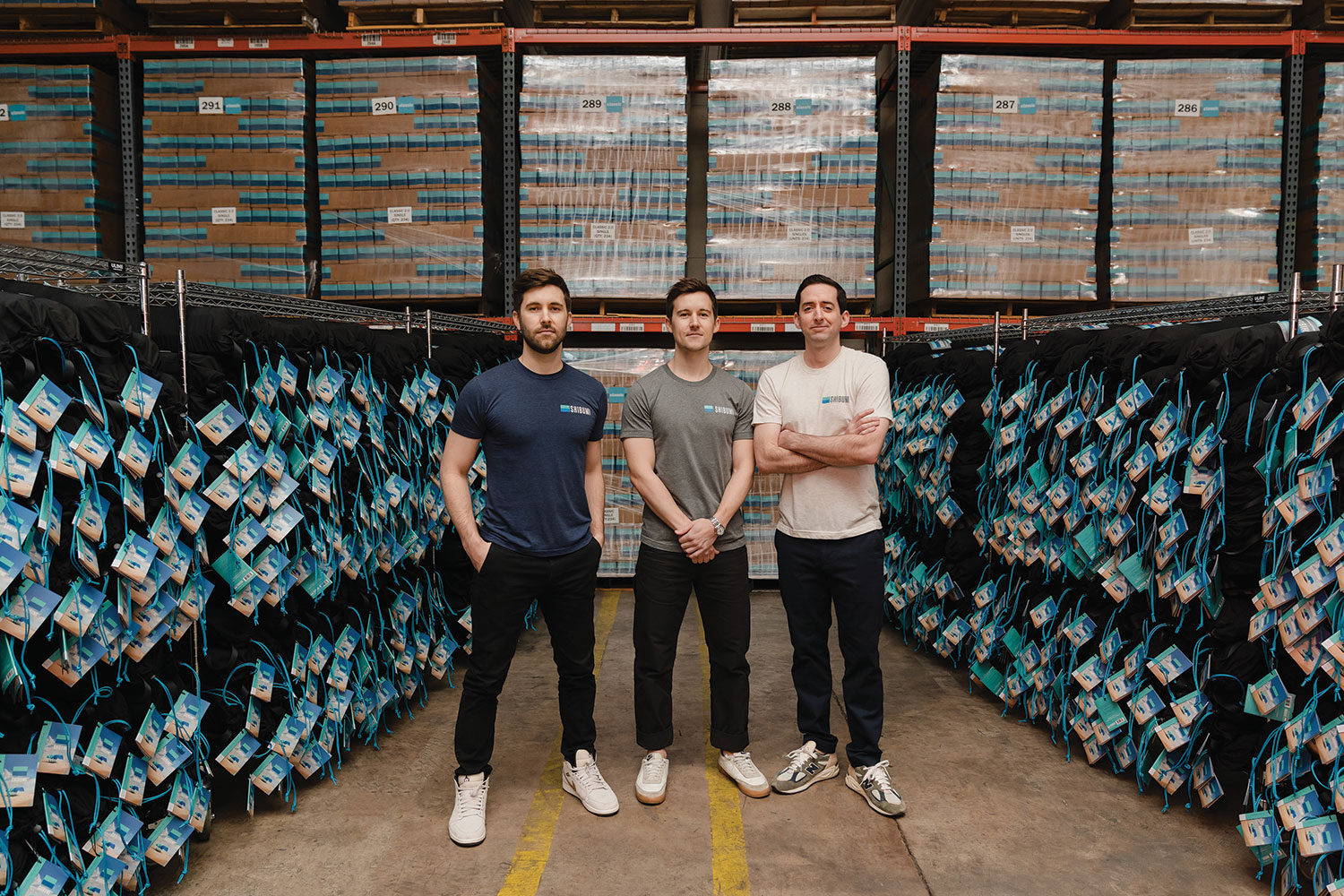
Shibumi founders Dane Barnes, Scott Barnes, and Alex Slater
“Family vacation was always one week at the beach in Emerald Isle. In those days there were only traditional umbrellas and the 10-by-10 pop-up tents. … As we got older, it was our job to help set up the shade,” recalls Dane. “We started daydreaming: Could there be a better way?”
“We were inspired by things like kites, seagulls and pelicans gliding down the beach, flying on the wind … and even dating back to when I was growing up, my grandparents would hang bed sheets on a clothesline, watching them blowing in the breeze. All of those things inspired us to wonder if the ocean breeze could help create shade.”
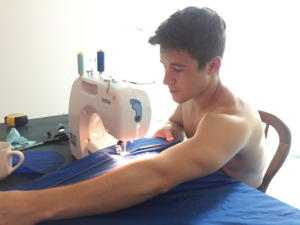
On one of those trips to Emerald Isle, the trio decided to act — using PVC conduit pipe, fabric from JOANN Fabric and Crafts, a hack saw, and a sewing machine.
“We taught ourselves how to sew, made the first prototype, and set it up on the beach — not ever thinking that this would be a business, but just making one for ourselves. It started to attract a lot of attention from other folks on the beach. … So many people came up that eventually it gave us the confidence to say, ‘maybe there is a business opportunity here.’”
That first summer — in 2016 — Dane, Scott, and Alex made 32 Shibumis, sewing each to order, and delivering them to customers.
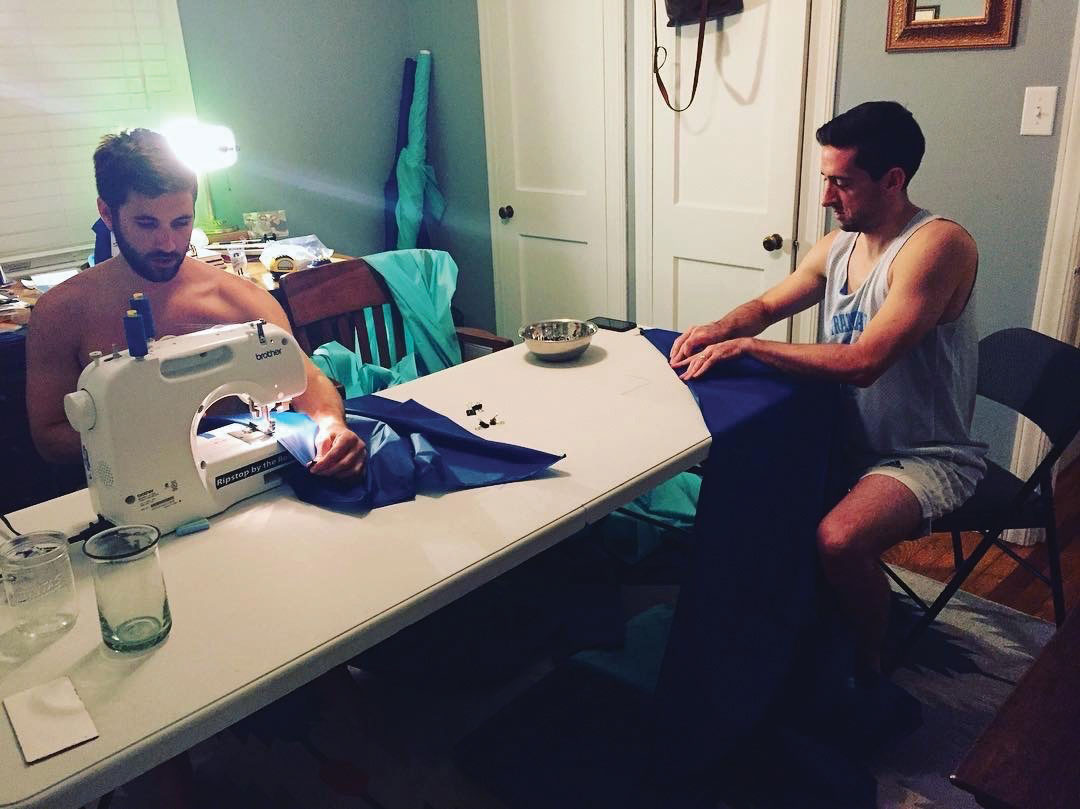
Shibumi founders made 32 shades, each sewn to order, their first year.
Ten years later, the company encompasses 30 full-time employees, headquarters and a warehouse in Raleigh, and its products have reached more than 800 beaches across the US.
“We personally called or texted our first 7,000 customers from our cell phones,” says Dane, leaving messages of gratitude and offering customer service support if necessary. The founders switched to text messages for the next 13,000 before ending the tradition once the sales rose too high to keep up.
“That was a cool time to tell our story to people and build that connection between the Shibumi brand and the customer,” he says.
The color-blocked, wind-powered beach shade exploded in popularity in NC, where it is commonplace — but still “unbelievable” Dane says — to see aerial images of dozens of Shibumis lining the coast in destinations such as Emerald Isle, Topsail Island, Wrightsville Beach, and the Outer Banks in the signature blue and teal hues.
“For the first seven years, we only offered the blue and teal (color combo). We chose those colors because they represent the deep water of the ocean, in the sapphire blue, and the shallow water is the teal. We think those are just beautiful colors that fit the place,” explains Dane.
“We did sell out our first five years in a row. Everything that we made, we sold out. It was just pandemonium for people trying to get one. That was a really exciting time,” he remembers. “We never dreamed that so many people would want a Shibumi Shade, and the demand caught us really by surprise.”
Customers are drawn to the ease of setup and take down, which can be accomplished by one person in a matter of minutes; the compact size and light weight (only 4 pounds); and the spread of shade coverage (up to 150 square feet). Ninety-four percent of the website’s reviews award the shade five stars.
Dane believes the brand’s commitment to customer service and their “Let’s Make it Right Promise” elevates Shibumi Shade above competitors.
“If something goes wrong, we’re going to make it right.”
Dane recounts one customer’s bizarre beach incident: “A customer writes in and there’s a photo of a (person holding a) tropical black and white striped fish, and it’s a little bit mangled. And then there’s a photo of a Shibumi with a big slit in it. The person writes in and says, ‘This hawk or eagle is flying down the beach, and it dropped the fish that it was carrying. That fish fell right through our canopy.’
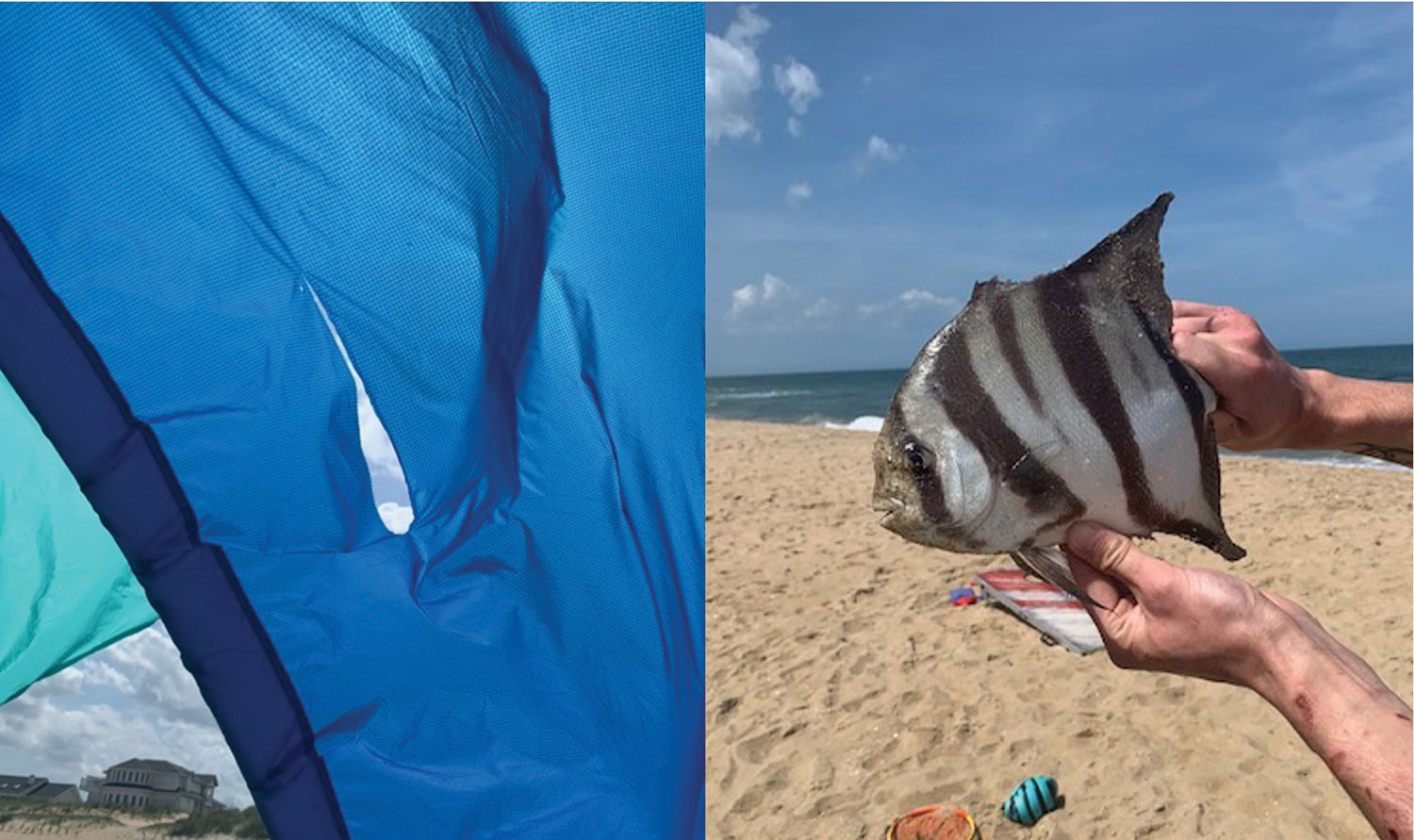
Shibumi stands behind its shades — even in unexpected circumstances like a wayward fish dropped by a passing bird.
“So we sent them a new one. We want to treat anyone who buys a Shibumi like they are our friend, like they’re our mom. We want to go above and beyond to take care of them.”
Creating high-quality products that are easy to use with beautiful designs has been the foundation guiding Shibumi’s innovations. When the company introduced a beach chair last year, it checked all those boxes, too.
Named by Forbes as the Best Beach Chair Overall in 2025 — the magazine called the chair “masterfully well-designed” and cited the rust-resistant marine-grade aluminum frame and the comfortable seat — Shibumi Chairs sold out in 2025. (At time of publication, the chairs are fully stocked in regular and tall versions. Go getcha one!)
It may sound like Shibumi’s 10-year journey has been nothing but beautiful sunsets and smooth seas, but there have been plenty of rough patches to navigate.
“We have had something like 180 copycats and counting. We luckily have been able to stop all of those using our intellectual property patents and so forth. Those are really unfortunate and stressful, but I am proud that we’ve been willing and able to defend the intellectual property of the invention,” says Dane.
“We have had to lobby a couple of local governments that had ‘Umbrellas Only’ rules. We had to make the case that tons of your residents and visitors want a Shibumi Shade.”
Myrtle Beach remains one nearby destination that maintains an umbrella-only policy, banning the use of Shibumi Shades — something the founders continue to work to change.
And the devastation caused by Hurricane Helene impacted one of Shibumi’s Western NC-based production partners, forcing a change in facilities.
The company maintains a commitment to innovation, always looking for ways to improve the products and processes. Two recent updates — introducing the Quiet Canopy and offering limited-edition colors — illustrate that dedication.
“Lots of people wanted new colors to express themselves and stand out a bit,” says Dane. 2026 options include “Sunset,” vibrant pink and orange, and “Summer Sky,” muted teal and gray, as well as the signature blue and teal “Ocean.”
Earlier this year, Shibumi introduced its first non-beach product: the Shibumi Park Vista.
“It’s essentially a shade for grass — think your backyard, soccer or football sidelines, parks. We’re really excited about our first product away from the beach.”
Dane, Scott, and Alex — natives of Winston-Salem and graduates of UNC-Chapel Hill — are frequently called on to speak to students at area universities, offering advice for aspiring entrepreneurs and reflecting on Shibumi’s growth.
“Not knowing how to do something should never get in the way of actually pursuing an idea — because we did not know how to do anything with Shibumi,” Dane admits. “We didn’t know how to create a logo (this was before AI). We didn’t know how to sew. We didn’t know how to ship something. We didn’t know how to get our product in a retail store. We didn’t know, really, what intellectual property meant. The list is endless for what we didn’t know how to do, but we believed in the idea, and I think that that’s enough.
“You’re going to encounter a thousand problems, and you’ll solve them one by one. There’s no guarantee that any given idea or startup or product may be successful, but not knowing how to do things should never stand in the way of giving it a whirl if it’s something you believe in.”

- Chronicles of an HOA: The Enclave at Sunset Lake
- Small Business Spotlight: Frankie Frankk’s Hot Dog Cart
- Recipes from Readers: Cake in a Cloud
- Strawberry Season
- Dig In & Drink Up: Larry The Cucumber
- Meet & Greet: Sim Ogburn
- See & Do: May to June 2026
- Perfect Summer Pairs
- Made for Shade
- Crazy for Collectibles