




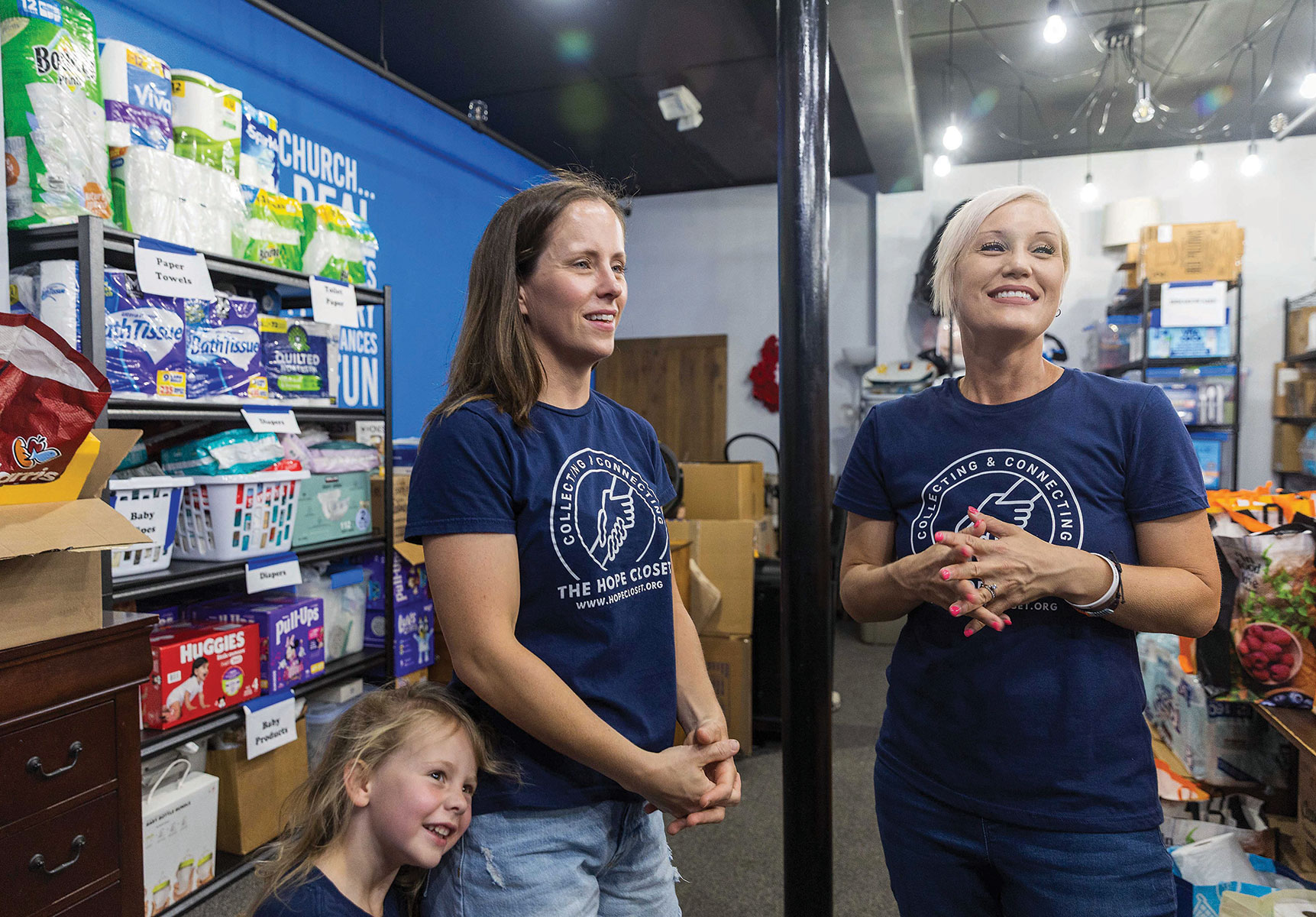
The Hope Closet, founded by Jill Luttman, left, and Ashley Manstedt provides household items and everyday essentials to neighbors in need.
When Fuquay-Varina native Ashley Manstedt started collecting donations for The Hope Closet, her garage filled within 48 hours.
“We operated for about three months, and my kids couldn’t even reach their shoes in the garage,” Ashley says.
Clean mattresses, linens, furniture, clothing, and toys poured in from the local community to support Ashley’s mission.
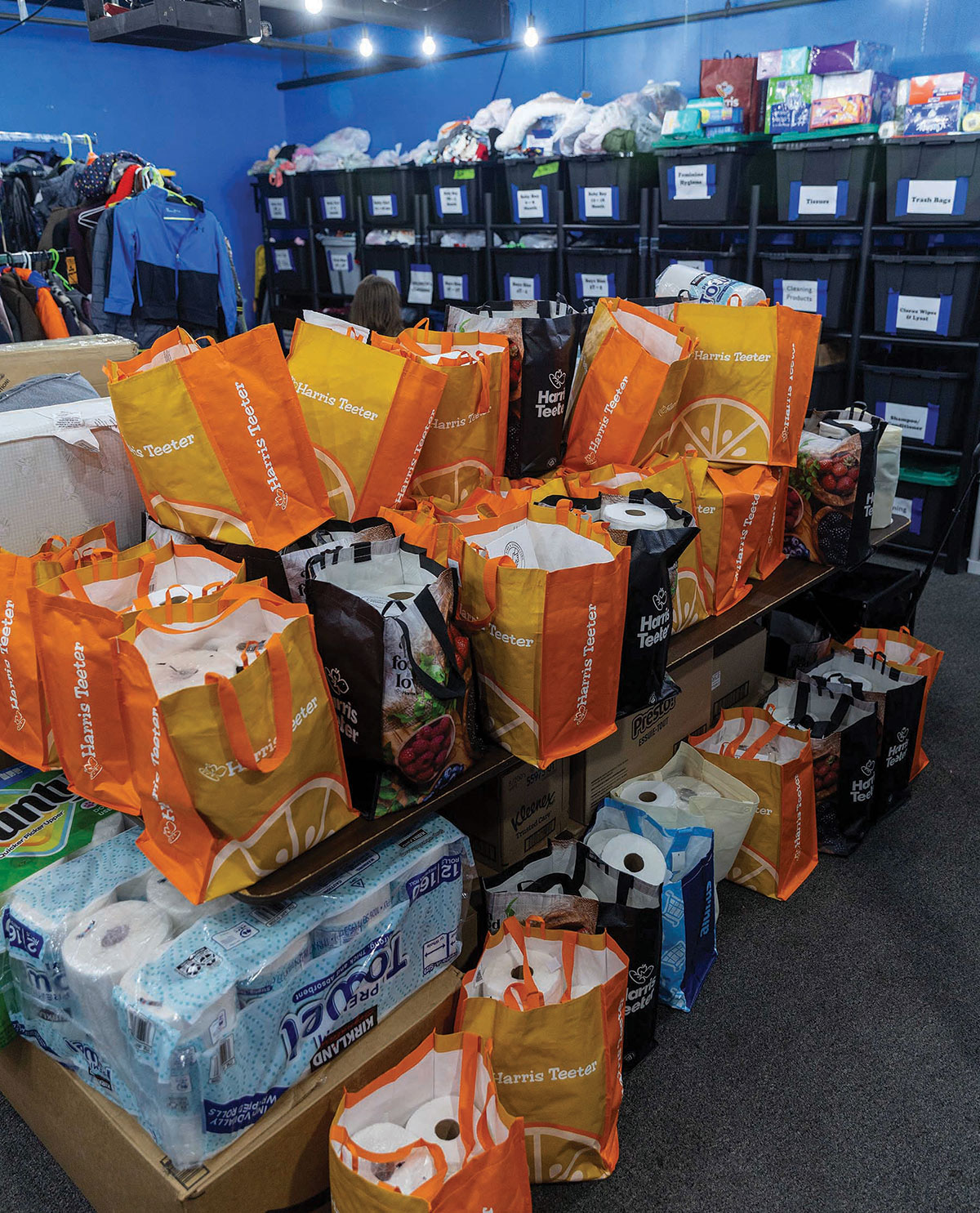
Hygiene essentials, such as toilet paper, dish soap, and paper towels, are among the most requested items delivered by The Hope Closet.
“It was phenomenal,” she says. “It was overwhelming, but it was beautiful.
“That’s where The Hope Closet was born. It started as a grassroots effort to provide for a Section 8 housing complex and provide household items and basic functional essentials that would make a house a home.”
Ashley noticed the lack of these types of household resources while she and other members of her church were delivering food donations to Bay Tree Apartments, a government-assisted housing complex in Fuquay-Varina.
“As we continued to show up there, what we were finding was not as much food insecurities as it was living conditions. Some of these folks were living in destitute and subpar conditions.”
“It was the first time that a group of people asked what my residents need and heard what I had to say,” says Linda Miller, property manager at Bay Tree Apartments, who lists toothpaste, dish soap, wash cloths, toilet paper, and towels among the most needed items for the complex’s residents. “When money is short, those are the things that don’t get bought.”
Wanting to help, Ashley put out a call for donations.
“One of the first drives that we did was for towels and linens. We collected from the community and took a group of volunteers and distributed a set of towels to every single — not every single unit — every single individual that lived there.”
“I began to share these stories with the local community, and the response was absolutely remarkable,” Ashley says.
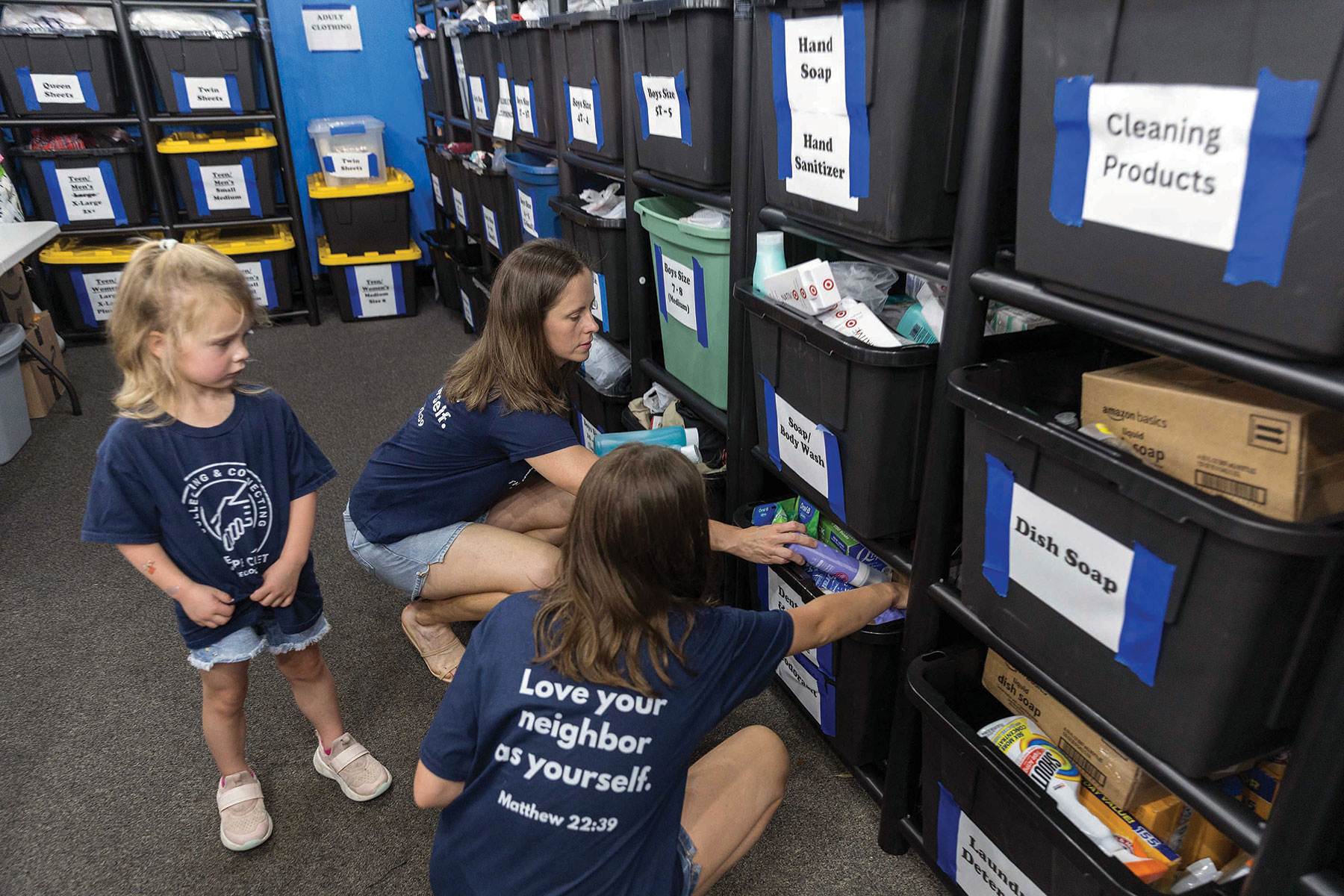
The Hope Closet maintains a storage facility in downtown Fuquay. A search for a larger space to accommodate the generous supply of donations received is underway.
Near the end of 2024, another Fuquay-Varina resident, Jill Luttman, heard about Ashley’s efforts serving the community and jumped in to help. Together the ladies found storage space for The Hope Closet to operate from, filed to become an official 501(c)(3), and organized volunteers to move furniture, make deliveries, and sort donations.
“There are two different ways that we serve,” says Ashley. “One is more of a reactive way. It responds to meeting direct needs, and it allows us to be a resource for the local Red Cross, CPS, social services, our school social workers. We respond to those needs and referrals.
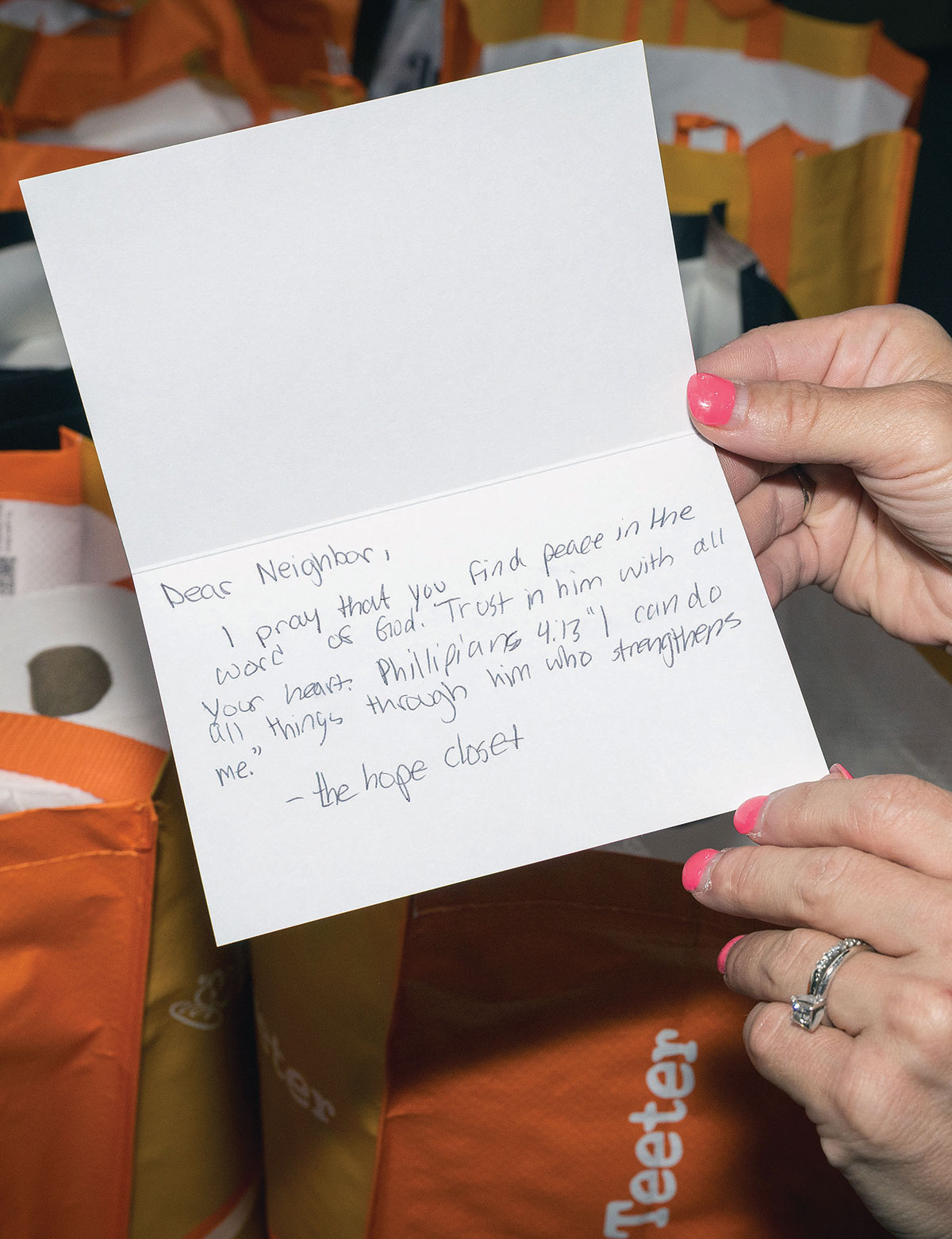
Care team volunteers write notes of encouragement that are included with deliveries of supplies.
“And our more proactive way is we take volunteers into those Section 8 housing complexes … where we will go and meet people where they are in location and in life, and hand deliver items free of charge. And by doing that, we’re not just improving living conditions, we are improving human connections.”
Ashley continues, “In a world that’s so digitally connected, we’re not physically connected. What we’re trying to do is build more community.
“That is where real change begins and ends — with empathy and compassion that can only stem from human connection. We want to look people in the eye and remind them, ‘You are seen. You are valued. Help is available, and you do not have to face this alone.’ Most of the time that matters so much more than the physical items themselves.”
Jill adds that a second layer of the organization’s mission is to create service opportunities for others.
“We want to be a community that serves community well. We want to invite volunteers into our mission,” she says.
Volunteers are needed to help with moving furniture, sorting donations, delivering essential items, and writing notes of encouragement.
“We purposefully deliver everyday items, like toilet paper and paper towels that are not covered by SNAP or WIC benefits, on a consistent basis. We’re meeting the physical need, but we’re also meeting that need of doing well checks on our neighbors. We’re able to knock on doors and say, ‘How’s life going? Do you have any additional needs?’” says Jill.
Often, families are placed in Section 8 housing after leaving crisis situations, such as domestic violence, fire loss, or relocations. They arrive with nothing but the clothes on their backs. The Hope Closet bridges the gap from having a roof over your head to having a safe, habitable home.
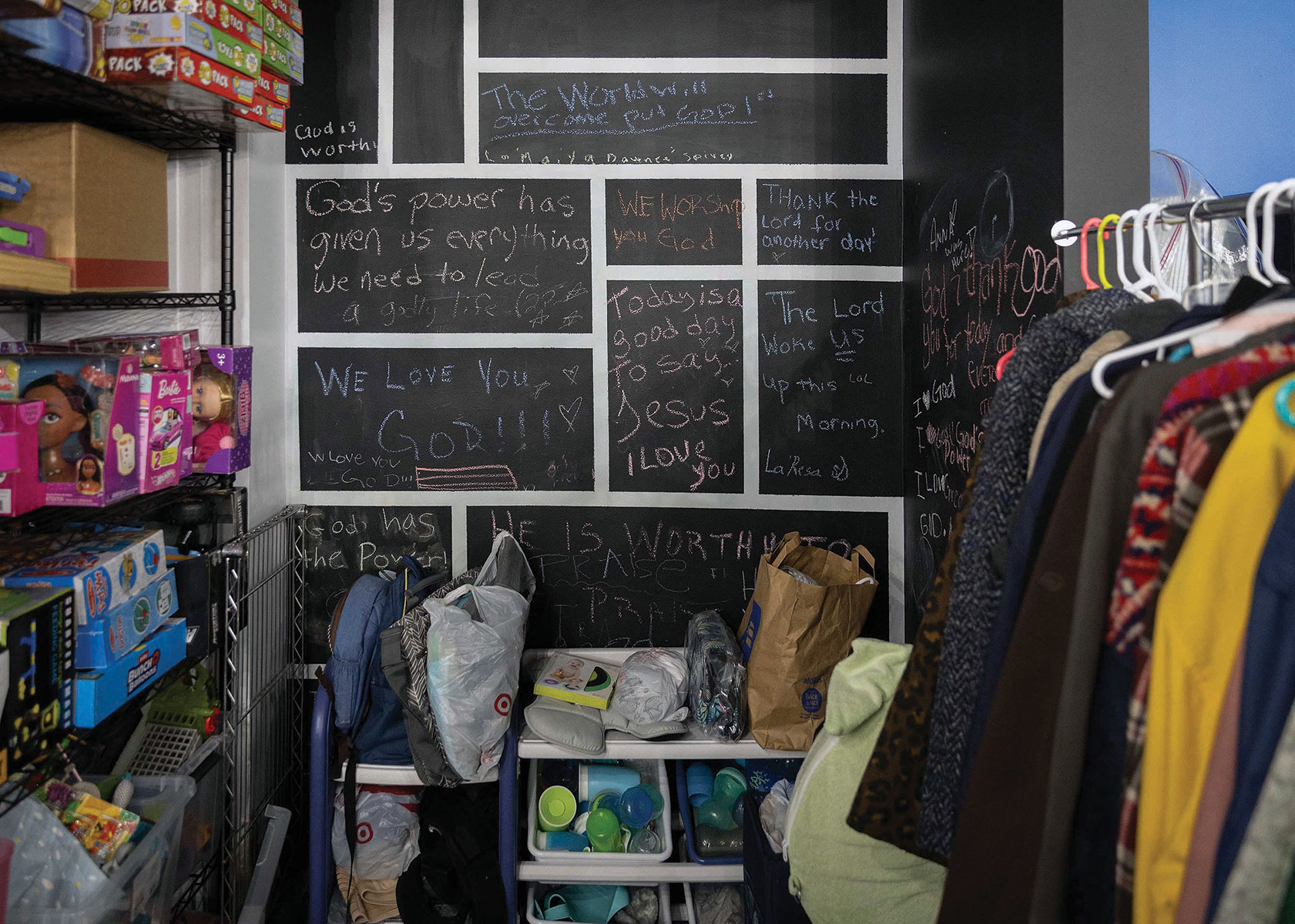
The Hope Closet emphasizes face-to-face connections with their clients to build a network of support and a sense of community.
Ashley shares the story of one of The Hope Closet’s clients: “This mom was leaving a domestic violence situation. She got placed into a four-bedroom house based on the size of her family; she had six kids. They got out with nothing. Not even their clothing. … We went in and — because of just the generosity of our community and having backups of towels and kitchen items and clothing — within 48 or 72 hours, we were able to fully furnish this home from top to bottom. All of the furniture, beds, clothing, kitchen appliances, toasters, dishes, down to Q-tips and feminine products for the girls. Every single item.”
“A lot of my residents are coming from homelessness or living with a relative,” says Linda. “They don’t have anything. I am amazed by what (The Hope Closet) can come up with. I am literally overwhelmed with what they are able to do.”
Sourcing donations hasn’t been a problem for The Hope Closet thus far; storing them, on the other hand, is a challenge.
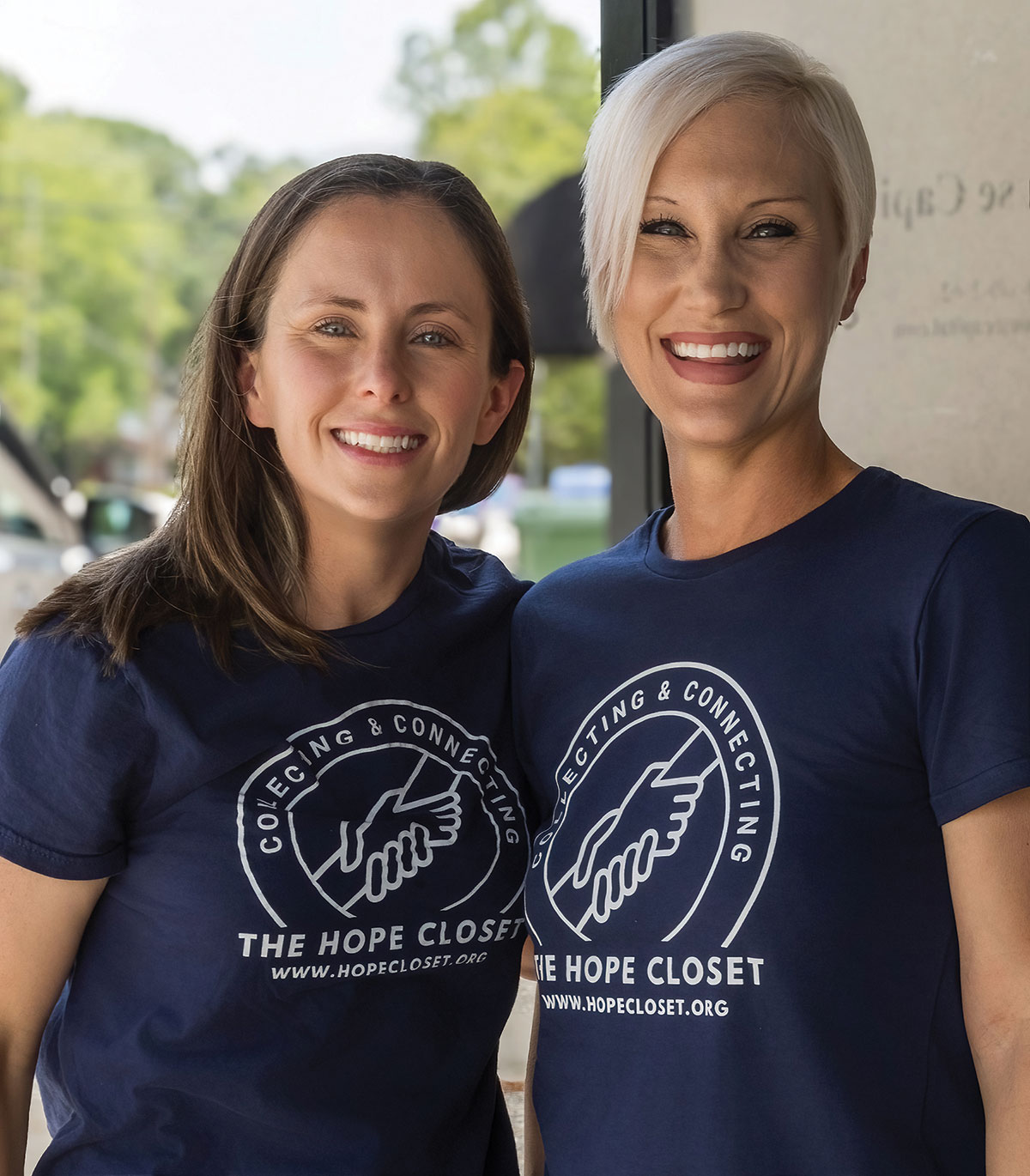
Jill Luttman and Ashley Manstedt
“We turn items away because of the space limitations. We could fill a warehouse,” says Ashley. “It’s the way our program model works: If somebody can give to an organization that they know will pick up then deliver directly into the hands of somebody that needs it, they’re going to choose that option for the items that they care about. … People want the items that they love to go to somebody that’s going to really, really need them.”
Just as Southern Wake is growing rapidly, so is the gap between needs and access to resources in the community. In less than two years of operation, The Hope Closet has served over 1,500 individuals across nearly 650 residences, with nearly half of those in the last six months.
“We fully furnished around 40 homes,” says Ashley. “We do not measure our impact at The Hope Closet by the quantity of the items we give away, but the quality of the connection we have with our neighbors facing real hardship.”
Editor’s note: Because of space limitations, The Hope Closet doesn’t maintain regular hours for donation drop off. If you have items to donate, submit a contact form via their website. Monetary contributions or purchases from their Amazon Wish List are always welcome.

- Recipes from Readers: Prosciutto & Peach Pizza
- Restaurant Spotlight: Oakview Public House
- Woman to Watch: Susan Weis
- Chronicles of an HOA: The Enclave at Sunset Lake, (Final Installment … For Now)
- Dig In & Drink Up: Korean-Inspired Bowls
- Meet & Greet: Jana Clinard Harris
- See & Do: September to October 2026
- Nonprofit Spotlight: The Hope Closet
- Backyard Bliss